Stump Grinding vs. Stump Removal: Which One Do You Need?
How the two ways to deal with a stump differ, and how to pick the right one for your yard.
Stump Grinding vs. Stump Removal: Which One Do You Need?
Two ways to get rid of a stump
Stump grinding uses a machine with a spinning cutter wheel to chew the stump down below ground level, leaving the roots to break down in the soil over time. Stump removal pulls out the stump and its main root ball, usually with an excavator or other heavy equipment, and leaves a hole that has to be filled. Most homeowners in the Triad choose grinding, but removal makes sense in some cases.
When grinding is the better choice
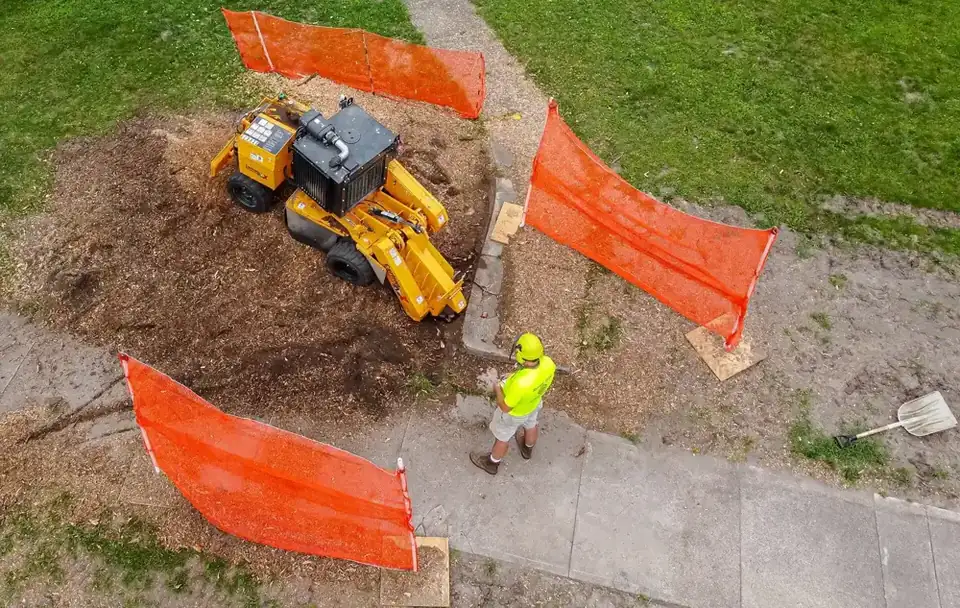
Grinding is usually faster, makes less mess, and is easier on the lawn around the stump. Compact grinders can fit through many backyard gates, so the work can often be done without bringing a large machine across the yard. If you only want to mow over the spot, plant grass, or put in a flower bed, grinding is often all you need.
When full removal makes sense
If you plan to build on the spot, such as a house addition, a driveway, a shed slab, or a patio, the builder may want the stump and main roots out so the ground does not settle later as they rot. Removal is also common when clearing a lot with many stumps at once. It disturbs more soil and leaves a larger hole to backfill and compact.
How deep a grind goes
Grinding depth depends on the machine and what you plan to do with the spot. A shallower grind is often fine for grass, while a deeper grind is better if you want to plant a new tree or shrub nearby. Tell the provider your plans before work starts so they grind to the right depth and cover any surface roots you want gone.
What to do with the grindings
Grinding leaves a pile of wood chips mixed with soil. Some people spread it as mulch in beds, and others ask the crew to haul it away. If you plan to seed grass in the hole, rake out most of the chips and fill with topsoil, because fresh wood chips can tie up nitrogen while they break down and slow new grass. Expect the spot to settle a little over the next few months and top it off as needed.
Regrowth and sprouts
Some trees, such as sweetgum, tree of heaven, and many maples, can send up sprouts from the roots after the tree comes down. Grinding below the surface helps, and any sprouts that show up can be mowed or clipped until the roots run out of energy. Ask the provider about the species you are dealing with.
Call 811 and point out septic and wells
Grinders and excavators dig below the surface, so contact NC 811 before work to have underground utilities marked. Point out your septic tank, drain lines, well, and irrigation lines too, since private lines are not marked by 811. Keep heavy equipment off the drain field.
Planning and pricing
Stump work is often priced by stump diameter, the number of stumps, access to the yard, and whether you want the grindings hauled off or the hole backfilled. Some tree removal quotes include stump grinding and some do not, so ask when you request a quote. Prices vary by property, and the provider sets the final price.
More tree service guides
- Winter Tree Removal and Ice Storm Prep in the NC Triad
- How to Tell if a Tree Is Dead, Dying, or Dangerous
Related help in the Triad
- Triad Land Clearing Pros for clearing whole lots, brush, and undergrowth.
- Triad Septic Pros if roots or storm damage are affecting your septic tank or drain field.
Have a question or need a price? Calls are answered 24/7.
Quick Answers
Is stump grinding or stump removal better?
For most yards, grinding is quicker and less disruptive. Full removal is usually chosen when you plan to build on the spot or clear many stumps at once.
Can I plant grass where a stump was ground?
Yes. Rake out most of the wood chips, fill the hole with topsoil, and seed or sod. Expect some settling and top it off as needed.
Will a ground stump grow back?
Some species can sprout from the roots after removal. Grinding below grade helps, and clipping any sprouts usually takes care of them over time.
Get a Free, No-Obligation Quote
Tell us a little about the job. A local tree service provider will follow up about pricing and scheduling.
- No cost to request
- No obligation to book
- Prefer to talk? Call (336) 814-8207